My research develops methods for imaging problems where measurements are indirect, noisy, or incomplete, and where the forward model itself may be uncertain. I combine physics-based models with deep generative models to uncover hidden structure in data, with applications from seismic tomography to black hole imaging. My PhD thesis, Uncovering Hidden Structure in Data and the Physical World for Seismic Tomography and Beyond, brings this work together.
Open Source Packages
- ehtim tutorial, led by Yvette Lin: how to use the ehtim package to simulate your own black hole measurements.
Projects
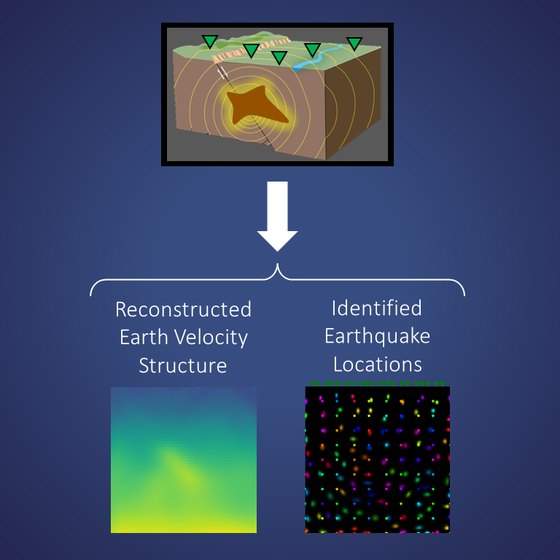
DeepGEM: Generalized Expectation-Maximization for Blind Inversion
Most inverse problems assume the forward model is known exactly. DeepGEM solves blind inverse problems, recovering both the hidden source and unknown forward model parameters without supervision, using a variational expectation-maximization framework built on normalizing flows. On blind seismic tomography it significantly outperforms the standard method used in seismology. Follow-up work, DeepGEM-EGF, applies the framework to jointly estimate earthquake source-time functions and empirical Green’s functions with uncertainty.
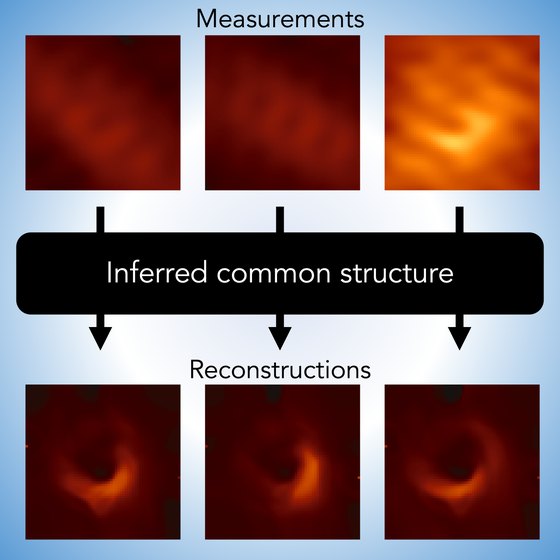
Image Reconstruction Without Explicit Priors
Image priors are essential for ill-posed inverse problems, but many scientific applications have no example images to learn them from. Instead, we reconstruct a set of images jointly, learning a shared image generator directly from corrupted measurements. As few as 150 measurement examples are enough for prior-free reconstruction, from denoising and phase retrieval to recovering a video of the evolving black hole M87*.
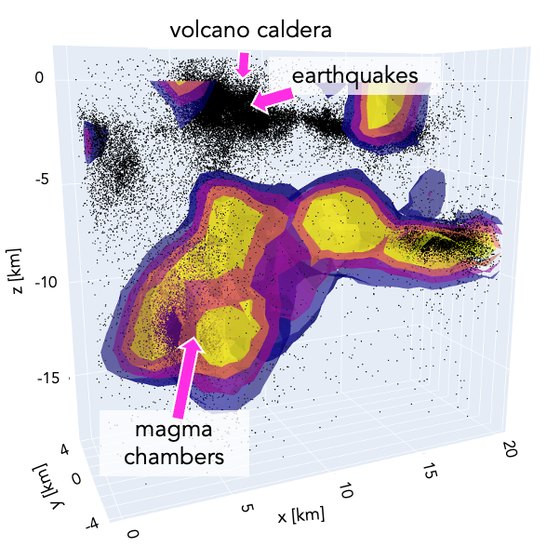
Imaging Kilauea's Magmatic System
A stochastic eikonal tomography method with per-pixel uncertainties estimated through variational inference. It produces a 3D reconstruction of the magmatic system beneath Kilauea at previously unattained resolution, revealing a columnar high-velocity-ratio region beneath the caldera and constraining its melt fraction.
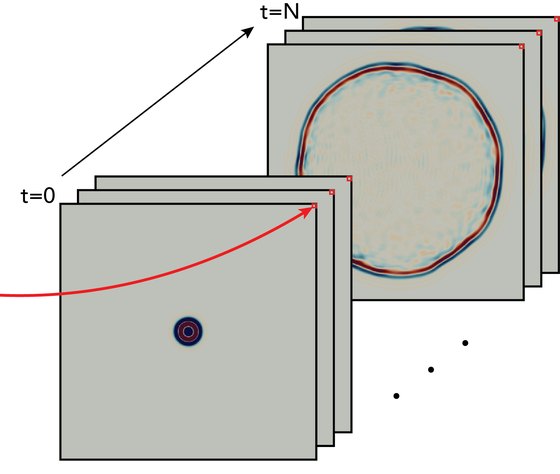
Neural Operators for Seismology
Neural operators learn solution maps for whole families of PDEs, making seismic wave simulation and full-waveform inversion far faster than traditional numerical solvers. Building on this, OpFlow extends normalizing flows to function spaces for functional regression with uncertainty quantification.
Earlier Research
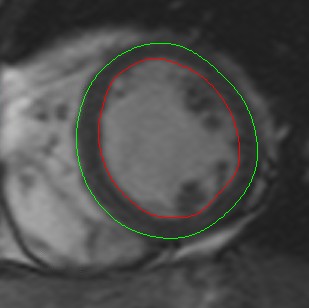
AI-Powered Inline Cardiac Strain Mapping
With Dr. Peter Kellman and Dr. Hui Xue at the NIH NHLBI, I computed myocardial strain from cardiac MR scans, using DenseUNets to segment myocardial tissue and implementing the strain calculation in C++ for the Gadgetron scanner pipeline.
Single-Shot Illumination Source Separation
In the Image Science Lab with Prof. Aswin Sankaranarayanan, I separated illumination sources from a single image using physics-motivated deep networks that learn the components of the image formation model: albedo, reflectivity, and shading.
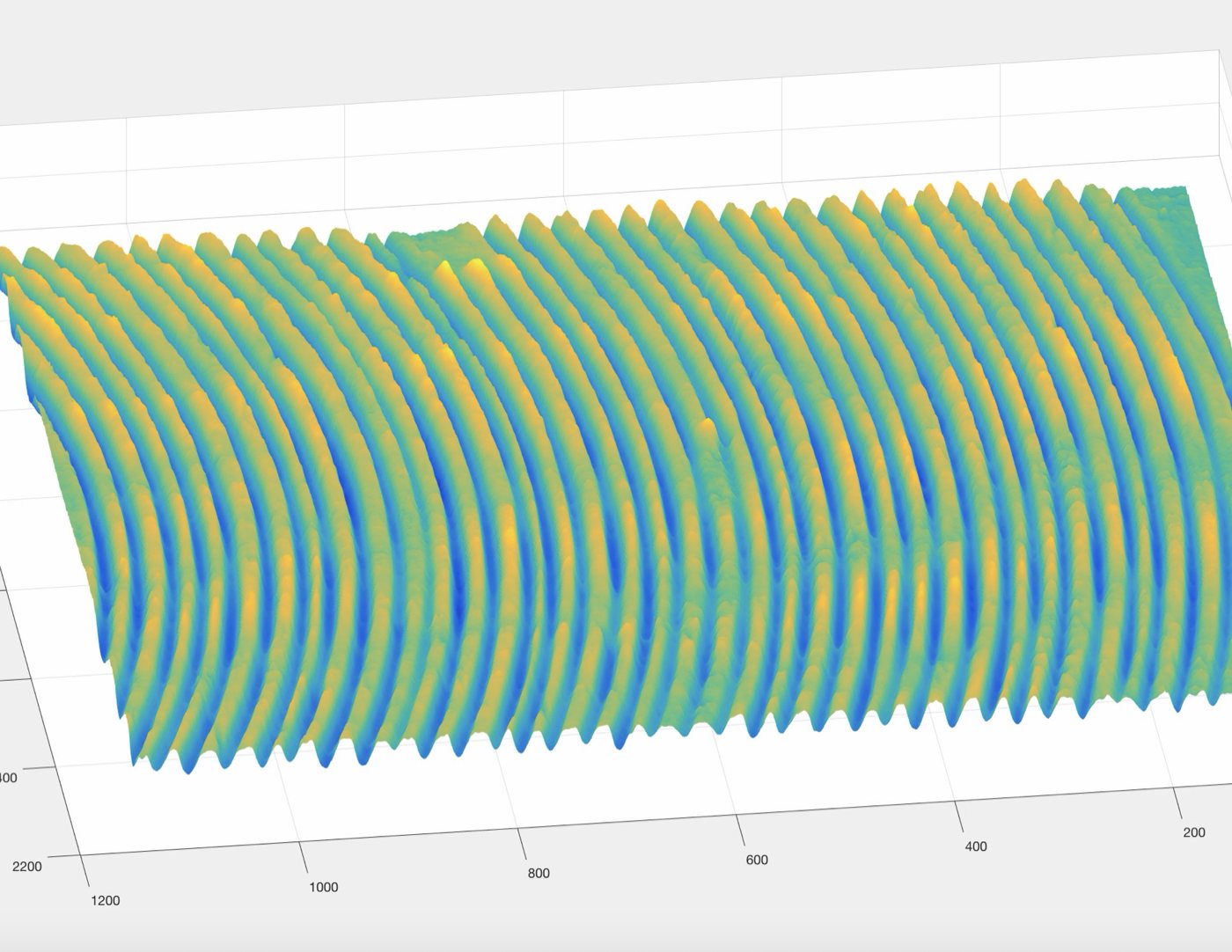
3D Reconstruction of Sonorines with Photometric Stereo
With Prof. Adam Finkelstein and Prof. Szymon Rusinkiewicz, I developed photometric stereo methods to reconstruct the 3D shape of sonorines, delicate plaster records.